
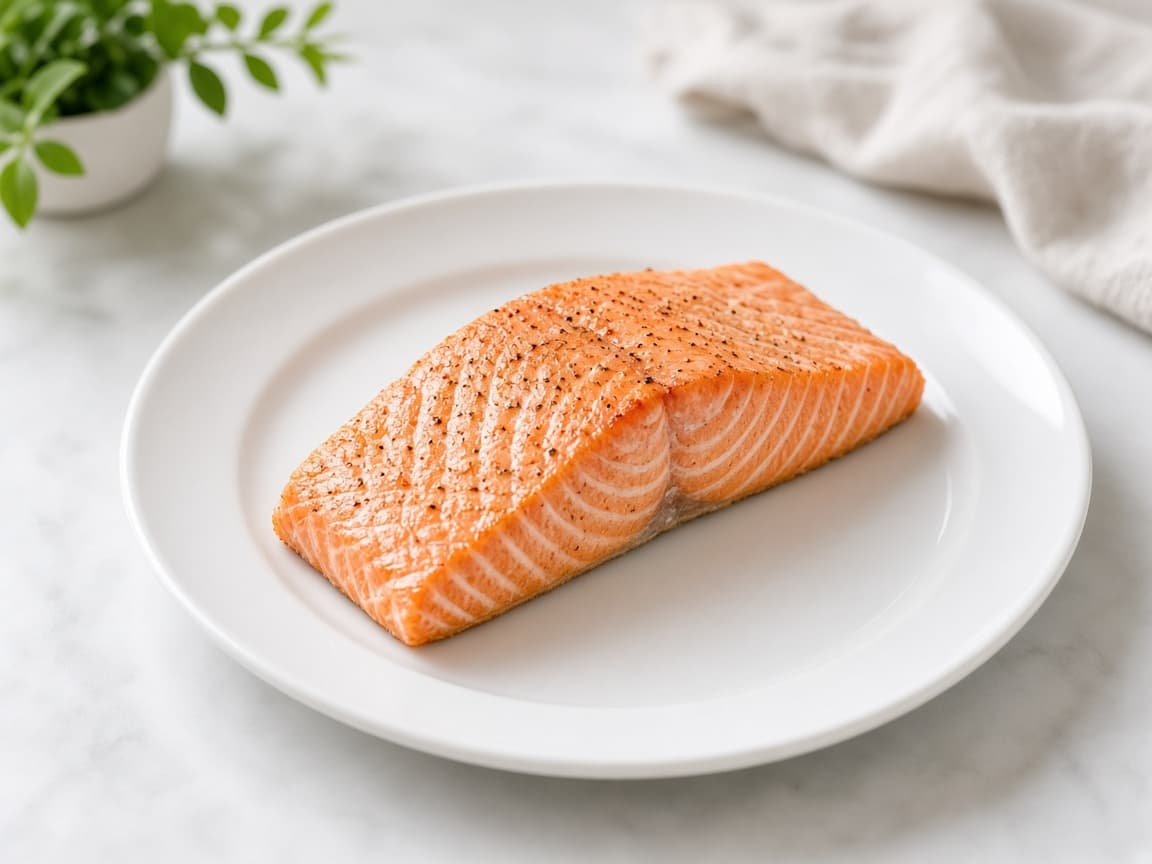
Cooked Salmon for Dogs and Cats
Dogs and cats: Safe when salmon is fully cooked, boneless, and unseasoned. Do not feed raw salmon. Bones and onion sauce are unsafe.
Fully cooked, boneless, unseasoned salmon can be an occasional topper for dogs and cats. Raw Pacific salmon can carry a fluke risk in some regions. Bones, skin fat, and onion marinades are the household hazards.
Researched & Compiled by the Pet Safety Hub Editorial Team
Clinical Data Sources: ASPCA Animal Poison Control Center & Merck Veterinary Manual
These pages describe clinical possibilities and a Green, Yellow, or Red triage path. They do not diagnose an individual animal or replace an examination by a licensed veterinarian. Read the editorial standards.
2. Why cooking matters
Heat kills many parasites of concern and makes bones easier to spot and remove. Fatty skin can upset the pancreas. Smoked or seasoned products often hide onion and salt.
3. Species portions
| Species | Use |
|---|---|
| Dogs | Small boneless cooked portion; remove very fatty skin |
| Cats | Teaspoon or two as a topper; not a complete diet |
4. When to call
Call if bones were eaten, the fish was raw, or the pet becomes weak or feverish days later after raw salmon in an endemic area.