
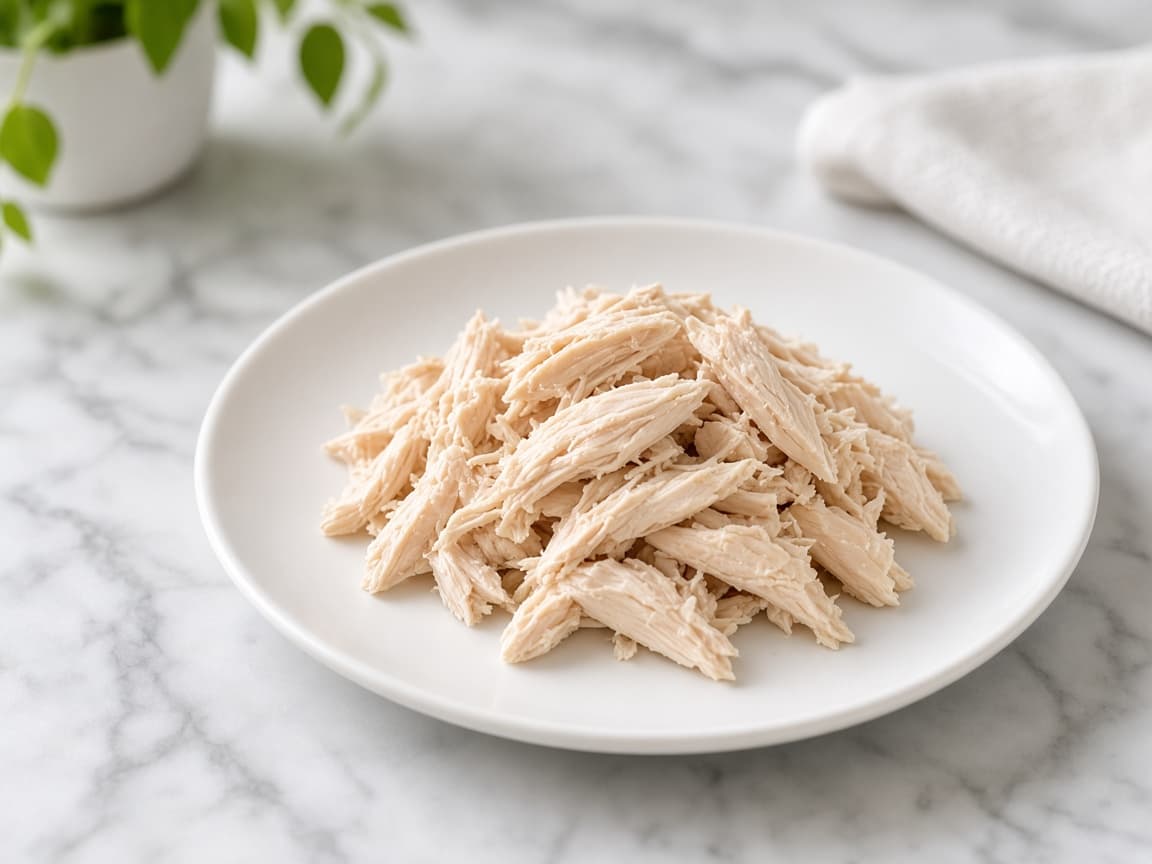
Plain Cooked Chicken for Dogs and Cats
Dogs and cats: Safe when the chicken is boneless, skinless, and unseasoned. Not a complete diet. Bones and allium seasoning are unsafe.
Boneless, skinless, unseasoned cooked chicken can be a short bland topper for dogs and cats. Bones splinter. Onion, garlic, and fatty skin turn a simple meal into a toxin or pancreatitis problem. Chicken alone is not a complete long-term diet.
Researched & Compiled by the Pet Safety Hub Editorial Team
Clinical Data Sources: ASPCA Animal Poison Control Center & Merck Veterinary Manual
These pages describe clinical possibilities and a Green, Yellow, or Red triage path. They do not diagnose an individual animal or replace an examination by a licensed veterinarian. Read the editorial standards.
2. How to prepare it
Boil or bake plain chicken. Remove every bone and most fat. Cool, shred, and mix a small amount into the usual food or use it for a short bland period a veterinarian already approved.
Dogs may get a larger topper than cats. Cats still need a complete diet after a short soft-food period. Watch for vomiting after greasy leftovers.
3. Risks that are not “protein”
| Hazard | Why it matters |
|---|---|
| Cooked bones | Splinter and can injure the gut |
| Skin and drippings | Fat load that can trigger pancreatitis |
| Onion or garlic seasoning | Allium toxin—see the onion guide |
4. When to call
Go in for bone choking, repeated vomiting, a painful abdomen, or a male cat straining in the box after any meal change.