
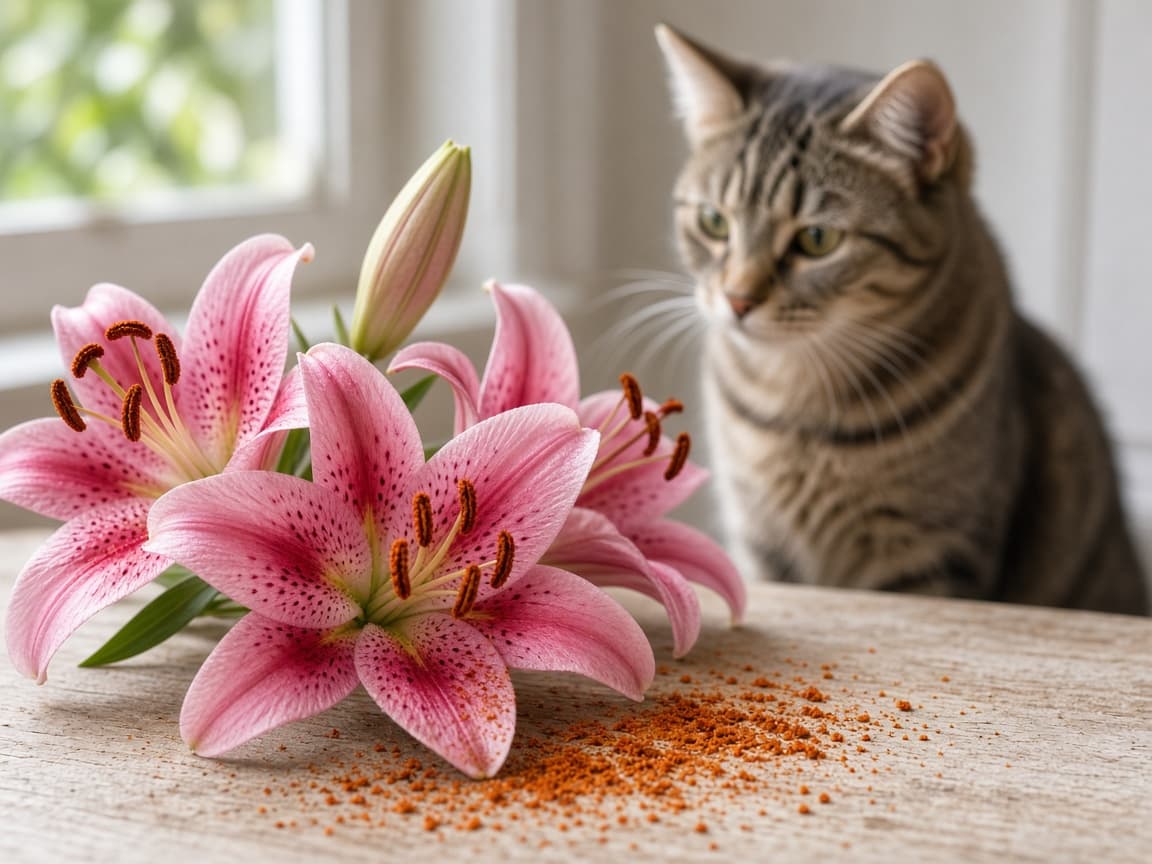
Lilies and Pets: Cat Kidney Emergency vs Dog Irritation
Cats: any true-lily exposure is Code Red. Dogs: do not let them chew lily plants; call if a large amount was eaten or vomiting continues. Remove the plant from any home that includes a cat.
True lilies in the Lilium and Hemerocallis groups can destroy a cat's kidneys from a chew, pollen, or vase water. Dogs more often get mouth and stomach irritation from the same plants, but any shared house with a cat makes the plant a household emergency. Peace lilies and calla lilies are different plants and still should not be chewed.
Researched & Compiled by the Pet Safety Hub Editorial Team
Clinical Data Sources: ASPCA Animal Poison Control Center & Merck Veterinary Manual
These pages describe clinical possibilities and a Green, Yellow, or Red triage path. They do not diagnose an individual animal or replace an examination by a licensed veterinarian. Read the editorial standards.
1. Direct answer
| Species | Status | Why |
|---|---|---|
| Cats | Deadly toxin | Unknown water-soluble nephrotoxin; pollen and vase water count |
| Dogs | Caution | Mostly GI and mouth irritation; shared homes still need cat-first thinking |
2. How lily injury works
In cats, a soluble toxin damages kidney tissue after even small exposures. Vomiting and hiding can start within hours; urine output may rise then fall as the kidneys fail. Dogs usually show drooling and vomiting rather than the same kidney pattern, but they can still feel miserable after chewing the plant.
Easter, tiger, Asiatic, and daylilies are the classic names to fear for cats. If you cannot identify the bouquet, treat it as a true lily until a clinician says otherwise.
3. Timeline
| Time | Cat pattern |
|---|---|
| Hours 0–6 | Vomiting, drooling, hiding, refusing food |
| Hours 12–24 | Increased thirst or urination may appear |
| Day 2–3 | Urine can drop as kidney failure progresses |
A cat who still looks bright after a nibble is not cleared. Kidney injury can advance while the coat still looks clean.
4. What to do now
For cats: remove the plant, wipe pollen if you can without delay, and leave for an emergency hospital the same hour. Bring a photo of the plant. Do not induce vomiting in a cat at home.
For dogs: remove the plant and call if vomiting continues or a large amount was eaten. Do not use peroxide unless a veterinarian orders it for this dog.
The lily emergency board walks through the first-hour hospital plan for cats.
Open lily toxicity emergency guide5. Clinic expectations
Cat teams often start intravenous fluids and kidney bloodwork even when the cat still looks fair. Decontamination is a clinic decision. Dogs are examined for mouth injury and gut upset; the bigger household risk is still a cat who shared the room.